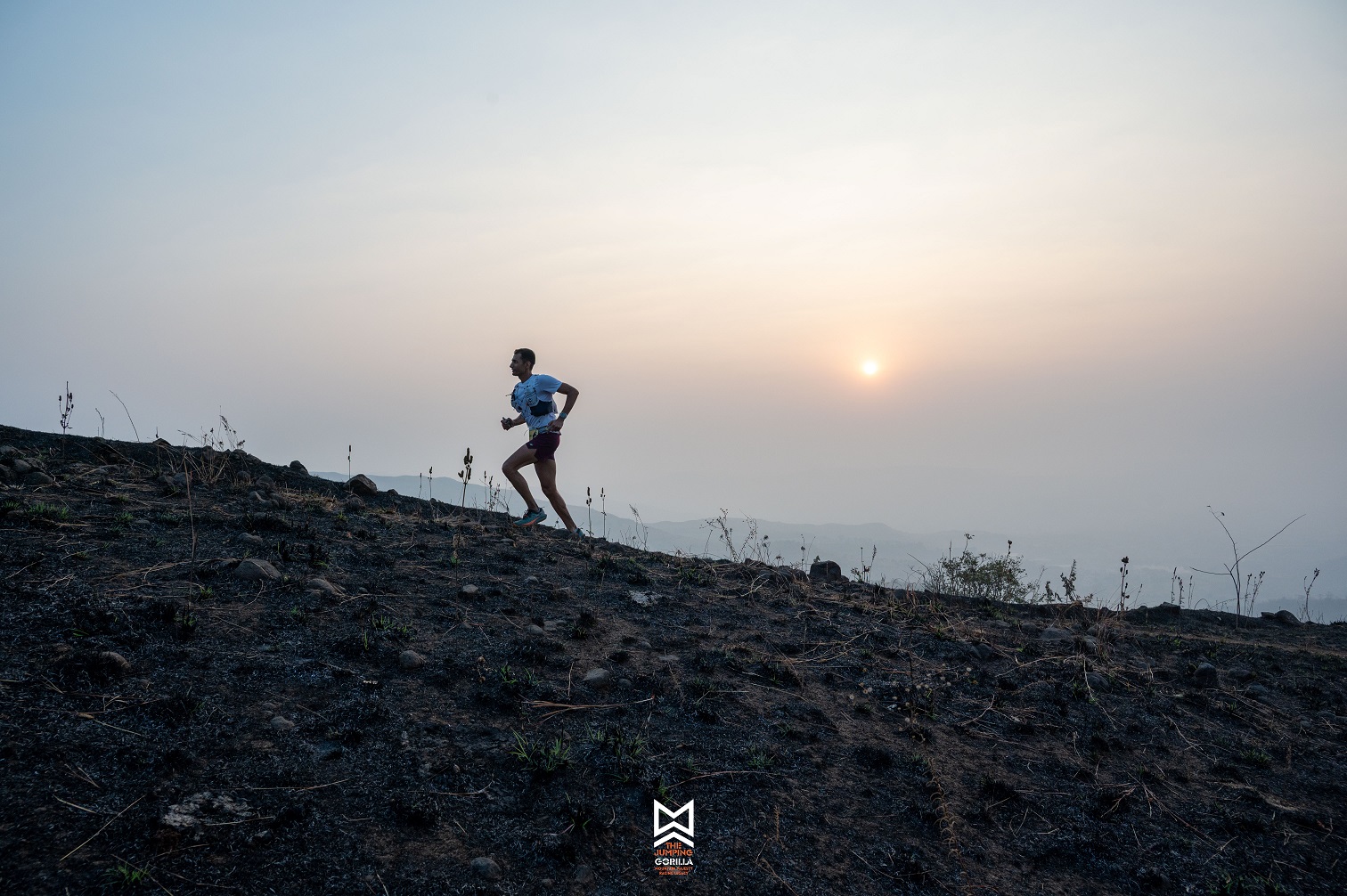
One of your friends asks you to join her for a trail run coming Saturday. You refused her because you had a long run planned on the same day. On Saturday evening you see your friend has posted some beautiful pics with breathtaking views and then you regret your decision of not going with her. You make up your mind that you will join her next Saturday. There is only one problem though, you are new to this sport and want to know the basics of trail running and how to start it.
Types of Trails
You reach out to her next day and ask your doubts and basics of trail running and she first explains you the types of the trails-
- Easy trails – These could be any unpaved paths that you can find in a local park, paddy fields or any country side trails without much obstacles. You find it easy to run on these trails because these are much like roads minus the hard surface.

- Light Technical Trails – In these trails you will find occasional obstacles in the form of stones, rocks, and tree roots etc. These trails challenge your leg muscles and demand much more concentration and alertness while running. You will find these trails mostly in the large meadows or around the forts but, of course, not limited to these areas.

- Highly Technical Trails – These trails don’t offer you much space to run and you often find yourself surrounded with hiking routes with big boulders and loose rocks with absolutely no clear route to run on. You not only use your legs but your hands too to climb up the obstacles and find your own way to move forward.

While you digest this information, you remember seeing beautiful views of a valley in one of the pics that your friend had uploaded. You ask her how did she reach there and she tells you that it was part of her trail run. You get confused, was it a run or a trek. Seeing you in dilemma, your friend explains you the concept of Elevation Gain.
Concept of Elevation Gain
Trail running has become a synonym to hill or mountain running. Every hill or mountain has a certain amount of elevation or height attached to it. You start from the base and reach the top. While doing so, you not only cover the horizontal distance but also the vertical distance by virtue of which you go upwards and reach the top. During your run, you will go up and down multiple times. Every time you go up you accumulate elevation/height. At the end of the run, the total amount of elevation you accumulated is termed as Total Elevation Gain and often represented as D+. When you go up, you come down as well, so the total amount of elevation you lose at the end of your run is termed as elevation loss and represented as D-.
You get excited and both of you decide to meet coming Saturday to try the Light Technical Trails.
Road running shoes are not for Trails
Comes the Saturday, you reach your friend’s home before time. She comes out and notices that you are wearing your regular road running shoes. She informs you with a heavy heart that you will not be able to go for the technical trails as these shoes are not meant for them. She takes you to the nearby city forest for easy trails and explains you about the trail running shoes.
Trail Running Shoes
While your road running shoes can be used on easy trails with paved paths and almost no obstacles, these shoes are not meant for the rugged technical trails. Road running shoes have soft soles which cannot withstand the uneven surface and pointed rocks you find on a technical trail. They do not even provide the good grip on the slippery slopes. For such trails you need Trail Running shoes which have hard soles, tough build and good grip or traction. These shoes allow you to run, jump, climb, or slip without worrying about the health of the shoes. Keep below points in mind while buying the trail running shoes:
- Make sure your shoes have hard heel grip which prevents your ankle from twisting on the trails.
- Should have hard outer sole with good visible lugs.
- Should have good enough laces which do not untie often during the run.
Apart from all these are the additional features which come with extra cost and depends on the person’s budget if he wants to buy them or not.
You both finish your run and you can feel the difference already. Your knees don’t feel stiff, your feet don’t pain because you have been running on a soft surface. You fall in love with the trail running.

How to buy the Trail Running Shoes
You come back home and without wasting any time you start searching for good trail running shoes. You come across multiple sites with big captions like “Top 5 trail running shoes”, “Best Trail Running Shoes” etc. You get overwhelmed and call your friend to help you out with this. She picks you up in the evening and takes you to the nearby Decathlon store. There she picks the cheapest shoe and convinces you to buy that because for a beginner that is the best shoe to start the trail running, even on the technical trails. Problem solved!
The Weird Things
Comes the next Saturday and as decided you both start jogging towards the base of your first technical trail. You notice that your friend is wearing some weird bag kind of thing with some water bottles in it. She also has two sticks in her hand. You think to yourself that it is just a 10 km run and there are no dogs to chase you here. Then why is she having so many water bottles and as if these bottles weren’t enough, she is carrying additional weight of sticks too. But you keep it to yourself and don’t say anything.
You start running on a gradual slope which soon becomes steep and you start walking. After some time, you get a breather in the form of downhill which soon takes you to another steep climb with rocks. You find it difficult at first but then you power through it. But, because of the high effort you consume all of your 500ml water in initial 5 km itself. Your friend notices that you are struggling to hike and you have run out of water as well. You both decide to cut short your run and come back after covering only 7 kms.
Once you reach home your friend explains you the importance of poles and hydration bag and how \these could be life savers.
Hydration Bag
Mountains and hills are beautiful, no doubt in that. But sometimes, these could be unforgiving too, especially if you are new to them. A small 5l back pack could be a good pick for all your trail runs ranging from 10 to 25KMs, considering you are not going on a highly technical and remote trail. You can hold water bottles, and ready to eat snacks in it. Which should include protein bars and some high carb food items like boiled potato, and gels.
These items will provide you enough calories while saving space in your bag. Just like running shoes, you have 100s of options in hydration bags as well. Some come with a water bladder in the back and some with a space for water bottles in the front. The later one is easier to carry water and other stuff, quick to refill and keeps the maximum of the weight in the front. Choice is yours which one feels more comfortable.

Trekking Poles
Next she explains about the trekking poles. She had noticed that your hands were on your thighs, you were breathing heavily, your posture was bad, and you were stopping regularly to catch your breath and give your legs and back some rest. Poles provide you extra pair of limbs which you could utilize to climb up and, in some cases, climb down as well. She showed you how to use them while going up and how it helps you keep your back almost straight and divides the weight on 4 contact points, which helps your thighs too.

Now, with all this information, you feel confident and ready to join her on her next trail run. But before you get too excited, she suggests you to keep your body ready for the strength demands of the trail running. She asks you to checkout the trail running specific strength training so that you don’t hurt yourself in the trails.